Literary cocktails and mocktails

It’s 5 p.m. somewhere, right?

A few days ago the Tome and Tankard blog posted their recipe for the “Lady Trent,” a mojito-like cocktail inspired by the Memoirs of Lady Trent. Our first attempt at making it here at Swan Tower was not entirely successful; it turns out we need to be a lot more conscientious about mixing the honey into the gin before adding other things, lest we wind up with a glob of honey stuck all over with mint leaves. 🙂 But the general shape of the cocktail is a great deal like the “Jimi Hendrix” I asked the internet to help me recreate a while back, so even in less-than-entirely-successful form, I give this one an official thumbs-up.

And for those of you who cannot or do not wish to partake of the booze, I thought I could post the recipe a reader designed years ago for the launch party of A Star Shall Fall. It’s called the Winged Serpent Philter, and it’s made as follows:

  • Blueberry juice
  • Fresh blueberries
  • Lime
  • Lime infused sparkling water
  • Honey
  • Granulated Sugar

In a small bowl, mix two parts water and one part honey. Coat the blueberries (three or four per drink to be served) in the honey water mixture and immediately roll in granulated sugar. Allow to dry. Dip the rim of a martini glass in the honey water mixture and then into granulated sugar to coat the rim. Mix three parts blueberry juice to one part sparking water with a dash of lime juice (all liquids should be chilled). For a sweeter flavor, omit lime juice. Pour into the martini glass. Put three or four sugar coated blueberries on a garnish pick and hang on the rim of the glass. Add a curl of lime peel. Serve promptly.

Enjoy!

Spark of Life: David Walton on THE GENIUS PLAGUE

According to gossip, Clive Cussler hated the movie Sahara for exactly the reason I liked it: because the hero, Dirk Pitt, isn’t the suave unflappable type who shrugs off ridiculous action sequences as if they’re all in a day’s work. He pants for breath, whoops in joy when crazy plans work, and generally acts like somebody you would want to know. So I have to applaud this week’s Spark of Life guest, David Walton, for recognizing that it’s vulnerability more than sangfroid that can make us connect with a character.

***

David says:

cover art for THE GENIUS PLAGUE by David WaltonAction heroes are hardy folks. They run from fist fight to car chase without pause, shrugging off bullet wounds and never stopping for breath. But most of us aren’t action heroes.

In my latest novel, THE GENIUS PLAGUE, Neil Johns is no different than the rest of us. But his life is turned upside-down when his brother becomes the vector for a fungal pandemic that alters the minds of its survivors. Neil runs from crisis to crisis, avoiding those who would intentionally infect him, ducking terrorist bombs, trying to stop a war, and restraining his own father from murderous violence. It’s a breathless sprint, made all the harder by the anguish of watching those he loves succumb to the plague and become his enemies.

I hadn’t planned to write it this way, but at one point in the story, I realized it was all just too much for him. This guy wasn’t James Bond. He’d been eating poorly, he’d barely slept, and he could only keep it up so long. And so in a public hospital cafeteria, Neil breaks down. Once he starts crying, he can’t stop, all the pent-up emotions crashing in on him as soon as he takes a moment to breathe.

James Bond wouldn’t have done that. A traditional action hero would have found something extra-macho (and probably incredibly stupid) to do instead. But Neil is a mathematician, not a Navy Seal. He’s fighting this battle because he cares about his family members, not because he has something to prove. He’s an ordinary person, and ordinary people have limits to how much they can endure.

It was one of those moments when a character becomes real on the page with an authenticity that had nothing to do with the needs of the plot, and as an author, you have to recognize those moments and just go with them. When planning a novel, it’s easy to let the plot rule events, but sometimes the characters know better.

In THE GENIUS PLAGUE, that moment gives Neil a chance to regroup and gather his courage. And he’s going to need all the courage he can get for what’s coming. The plague impacts world politics, tearing governments apart from the inside, and putting control of the US nuclear arsenal in jeopardy. Neil is one of the few who understands what’s happening and has the knowledge to contain it, if he can manage to avoid being infected himself.

It wasn’t much: just a small, unexpected spark of life that pulled Neil off the page and made him more real, but despite its quietness, it turned out to be one of my favorite moments of the book.

***

From the cover copy:

In this science fiction thriller, brothers are pitted against each other as a pandemic threatens to destabilize world governments by exerting a subtle mind control over survivors.

Neil Johns has just started his dream job as a code breaker in the NSA when his brother, Paul, a mycologist, goes missing on a trip to collect samples in the Amazon jungle. Paul returns with a gap in his memory and a fungal infection that almost kills him. But once he recuperates, he has enhanced communication, memory, and pattern recognition. Meanwhile, something is happening in South America; others, like Paul, have also fallen ill and recovered with abilities they didn’t have before.

But that’s not the only pattern–the survivors, from entire remote Brazilian tribes to American tourists, all seem to be working toward a common, and deadly, goal. Neil soon uncovers a secret and unexplained alliance between governments that have traditionally been enemies. Meanwhile Paul becomes increasingly secretive and erratic.

Paul sees the fungus as the next stage of human evolution, while Neil is convinced that it is driving its human hosts to destruction. Brother must oppose brother on an increasingly fraught international stage, with the stakes: the free will of every human on earth. Can humanity use this force for good, or are we becoming the pawns of an utterly alien intelligence?

David Walton is the author of the international bestseller SUPERPOSITION and its sequel SUPERSYMMETRY. His novel TERMINAL MIND won the 2008 Philip K. Dick Award for the best SF paperback published in the United States for that year. He lives near Philadelphia with his wife and seven children.

an authorial self-indulgence

Back in July, I got an email from a reader in Sweden named Gillis Björk, saying they’d loved the Memoirs of Lady Trent so much, they were inspired to make a carved wooden slipcase for the series, and would I like to see pictures/a video of the crafting process.

WOULD I EVER.

In fact, having seen the slipcase . . . I sent Gillis an email, asking how much they would charge to make one for me.

Because seriously, the Memoirs are so damn pretty, with Todd Lockwood’s cover art and the three-piece cases and the deckled edges and so forth. Didn’t they deserve a good house to live in? It was a total self-indulgence, but I thought, hey, if Gillis was willing . . .

Behold the result! (Turn up the volume to hear the narration — it’s quite faint.)

It is even prettier than the original. We went for oak instead of beech, and Gillis got a lot more detailed with the carving of the dragons and so forth. At the end of the video you can see the slipcase on my shelf, with the books inside! And if you want to watch the making of the original version, that’s here:

Complete with accidentally-decapitated dragon and guidelines for avoiding spontaneous combustion. 🙂 These videos make for a fascinating watch if you enjoy seeing crafters do their thing; since I know bugger-all about woodworking and carpentry, they were hugely educational to me. And my endless thanks to Gillis for the lovely result!

In Better News

I recently signed up for an email service called “In Better News” (formerly, I think, “Kittens and Kindness”). Every day it sends an email with three pieces of news concerning people doing good deeds in the world, at various levels: everything from Coca-Cola giving men permission to break into one of their warehouses and take bottled water to help hurricane victims to a six-year-old girl setting up a lemonade stand with the goal of eliminating lunch debt at her school. Then, after those, you get three links to things involving cute animals.

It’s basically these tikkun olam posts, delivered to your inbox every day. With bonus cute animals.

Share with us your better news, however great or small. Your efforts to repair the world, one brick at a time, building a wall whose purpose is not to exclude but to shelter others from the storm. Donations, volunteering, random acts of kindness, alterations in your life that make you a better neighbor and friend. Anything to lift the spirit.

Remember Stanislav Petrov

Thirty-four years ago today, Stanislav Petrov saved the world.

As we struggle through the mire of war, as we wade ever deeper into the morass of armed conflict around the world, let’s take a moment to honor the guy who kept his head and prevented nuclear retaliation. He passed away in May of this year, but his memory should live on.

Catching up on New Worlds

My Patreon is trucking along, but I haven’t been good about linking to it here. So have a list of recent posts!

This week’s post (sneak preview!) will be on rites of passage, followed by a bonus post on the theory of worldbuilding, since that’s one of the funding goals we’ve reached. Remember, this is all funded by my lovely, lovely patrons — and if you join their ranks, you get weekly photos, plus (at higher levels) opportunities to request post topics or get feedback on your own worldbuilding!

So. much. TV.

I watch a surprisingly large amount of TV these days, because there is so much out there, and so much of it good. But I wind up almost never posting about any of it, because I have all these thoughts and then I don’t get around to writing the big long in-depth post. In lieu of that, have scattershot thoughts about things I’ve watched in the last year.

* I didn’t like the second season of Supergirl quite as well, due in part to me having zero interest in Mon-El. But man, that show is not remotely shy about wearing its politics on its sleeve, with episode titles like “Resist” and “Nevertheless, She Persisted” and plots about protecting resident aliens from attempts to deport them. So even though they have the occasional episode where everybody is phenomenally stupid in order to give Mon-El a chance to look smart (seriously, that one was so bad), it is balm to my soul.

* Frequency has hooked me surprisingly fast, with some good dialogue and a clever twist on what might otherwise be a bog-standard serial killer investigation plot: because the SFnal conceit is that the cop heroine is in communication with her cop father twenty years in the past, when she has him follow up on a lead, half the time she winds up changing the evidence out from under her own feet, e.g. going to a suspect’s house only to find out that in the new timeline he moved away nineteen years ago. Also, it turns out to be based on a film — but among other changes, they turned the father/son setup into father/daughter instead. Woot! Sadly, because everything I like gets canceled, there’s only thirteen episodes of it. (Currently we’re seven in.)

* The Defenders was decent, but distinctly uneven, in no small part because my god Danny Rand is just. not. interesting. (As I said on Twitter a while back, Iron Fist bored me so intensely that I didn’t even get far enough in to hit the unfortunate racism.) And unfortunately, he’s kind of at the center of the plot. On the other hand, watching the script take the piss out of him at absolutely every opportunity was kind of entertaining. And you could make a fabulous montage just of the reaction shots from Luke Cage and Jessica Jones.

* I have no idea what they’ll do with the second season of The Good Place, but dude, somebody made a comedy show ABOUT ETHICS. Like, actual philosophical discussions of what constitutes ethical behavior and how the various models of that differ. I am so there. Again. (I can’t believe it got a second season.)

* The Musketeers is far more entertaining than I expected it to be (though admittedly, my expectations went up when the opening credits told me it had Peter Capaldi). Of course it bears only a general relationship to the novel, being an episodic TV series, but it doesn’t have to warp the concept too far out of shape to work; the basic engine is the running political conflicts between the King’s Musketeers and the Cardinal’s Guards, with invented incidents to keep that rolling along. Capaldi is an excellent Richelieu, obviously scheming and ambitious without being a one-note villain (sometimes he and the Captain of the Musketeers work together). And the episodic format gives them some time to explore the individual characters. Much to my surprise, Porthos — usually my least favorite of the set — is really good here, in part because the actor is black and that is relevant to the character’s life story. A Porthos with depth, rather than just being the drunken comic relief? What is this madness??? Also, it’s doing reasonably well by its female characters, including making sure that the invented incidents have women in them, so you’re not limited to the recurring trio of Constance, Milady, and the queen. Yeah, okay, so I’m pretty sure Constance bears only the most passing resemblance to her novel incarnation — but since I like this version of her and have no particular attachment to the novel incarnation, I’m fine with that.

* Ascension was interesting, but flawed. Basic concept: A generation ship got sent out in the ’60s and is now halfway through its 100-year-journey, with tensions rising. The worldbuilding was intriguing, even as I wanted to beat characters about the head for some parts of it (seriously, who thought class stratification in a society that small and enclosed was a good idea?), but the end felt like it was a cliffhanger for a season 2 that, as near as I can tell, not only doesn’t exist but was never intended to.

* I feel like the seventh season of Game of Thrones was distinctly better than the sixth, transit time silliness notwithstanding. It registered on me as a better balance of major plot movement and the little dyadic interactions, which have always been one of the show’s strong points: the writers’ ability to put two characters together and have a fabulous scene happen, whether the flavor is hilarious banter or a flaming train wreck. Plus, Olenna Tyrell may have claimed the title of Most Badass Moment for the entire series. I mean, it was horrible. But it was also this phenomenally powerful, vicious interaction that played out as a quiet conversation between two people alone in a room, without any action spectacle whatsoever. Kudos.

* I enjoyed the first season of Lucifer, but the second took off like a rocket. Seriously, were the writers on a sugar high all season long? They just cranked everything up to eleven, and the result came to life for me in a way the earlier episodes hadn’t. I’m sad they lopped off the last couple of episodes to put them on the beginning of season three, because it meant I got less of what I was enjoying last spring, but from a narrative standpoint I can absolutely see why they did. That comes back in a few weeks and I’m looking forward to it.

* Also, more of The Librarians. One of the few things I fell in love with that hasn’t gotten canceled, even if I don’t think the third season was quite as good.

Has anybody else been watching these? Any recs for shows you’ve been enjoying? I’m primarily interested in stuff that is either SF/F or historical, and skewed more toward the “fun” end of the spectrum than gritty greasy grimdark. I am almost completely burned out on police procedurals, unless they’ve got a strong metaplot or a substantial twist from the usual model.

Today’s random gaming thought

You can tell how much an RPG system cares about a thing by how granular the rules for it are.

I’ve known this for a while, of course. RPGs evolved out of historical war-gaming, so many of them have incredibly detailed rules for combat, and much less detailed frameworks for other activities. But there’s another angle on this that I don’t think about as often, which is: when you get a bonus, how restrictive vs. broad is the application of that bonus?

In L5R, there’s a spell that gives you a boost to Perception-based rolls. All Perception-based rolls. Vision? Hearing? Scent? Reading people’s behavior? Commanding an army in battle? (For reasons of setting philosophy, that’s based on Perception.) This spell boosts all of them. Because although L5R is better at caring about non-combat stuff than some game systems, it’s really not all that interested in the finer-grained applications of Perception. Instead of having many spells that give you bonuses to different kinds of Perception, there’s one that hits them all.

Or Pathfinder. My PC has a magic item that gives a +3 to all Charisma-based skill checks, because Pathfinder, like most D&D, fundamentally doesn’t give a damn about social interaction. There is not, to my knowledge, a magic item that gives a +3 (or a +anything) to all Dexterity-based skill checks, because that would include Stealth (good for avoiding combat or taking the enemy by surprise), Acrobatics (good for avoiding attacks of opportunity in combat), Ride (good for anybody engaging in mounted combat), Disable Device (good for picking locks and disarming traps), and Escape Artist (good for escaping entangle and grapples in combat), among others. But handing out a cheap blanket bonus to Bluff, Diplomacy, Disguise, Handle Animal, Intimidate, Perform, and Use Magic Device? Eh, why not. That last is pretty much the only one that will often matter in combat, unless you’ve taken all the feats necessary to make feinting via Bluff a useful thing to do. And the game is relatively uninterested in what happens outside of combat.

And then you get players arguing that doing X isn’t very interesting. They’re right, in a way, because the rules have made it uninteresting. All you need is this single effect and you’re great at the whole shebang. But if the rules started from the assumption that X is interesting, and treated it with the same care and complexity of flavor they use for other aspects of play, it might be a different story.

(No game can do that for every single aspect, of course. If you tried, you’d wind up with something of unplayable complexity. But it would be nice to see that care and attention given to things other than combat more often.)

On cover art and Maps to Nowhere

I’ve gotten several compliments on the cover art for Maps to Nowhere, and wanted to take a moment to talk about it.

cover art for MAPS TO NOWHERE by Marie Brennan

For me, the cover is the hardest and most expensive part of doing an ebook. Because I’m a member of Book View Cafe, I work with a bunch of people who know how to do things like format them (Chris Dolley regularly does mine). And we have cover designers, of course; my own covers have been the product of efforts by Leah Cutter, Pati Nagle, and Amy Sterling Casil.

But that’s cover design. That’s figuring out how to stick the title and my byline on an image in a way that will be readable and attractive — and I’m very grateful for their help, because my image editing skills are all oriented toward photo processing, not drop shadows and embossing and knowing my way around eight million fonts. Before we get to that point, though, I have to answer another question: what do I want the cover to look like?

BVC can help with that, too, suggesting ideas based on the subject matter of the book or hunting through stock photo signs and DeviantArt to find possibilities. In the end, though, I’m the only one who can really say “yeah, that’s what I want” — which in practice means that I wind up doing most of the brainstorming and hunting myself, because I don’t feel like it’s fair to make someone else suffer through my “ehhh, uhhhh, maybe, I dunno” indecision. And depending on where you get the image from, licensing it will cost a sum of money ranging from a pittance to quite a bit; commissioning art is definitely on the “quite a bit” end. So: hardest and most expensive part of the ebook.

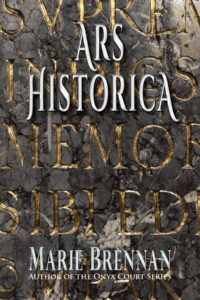
Which is why I’ve started casting a speculative eye toward my own photos. God knows I take enough of them; and while many aren’t suitable for covers (wrong orientation, too much noise, taken somewhere that doesn’t permit commercial use, etc) or the book itself is something that doesn’t lend itself to photographic representation (the Wilders books, frex), I’ve managed a few. In London’s Shadow uses a detail I shot of the clock on the Rathaus in Basel, Switzerland; the upcoming Ars Historica collection will use another image from that trip, a closeup of an inscription in a church. Dice Tales is built from a die photo I took specifically for the book, which Leah Cutter then photoshopped to change the top four faces, and a block of text I put together for the background, because it was that or staging the equivalent of the Writing Fight Scenes cover with some dice in place of the sword.

But for Maps to Nowhere?

I had nothing.

I didn’t have any particularly good map photos, because those are almost always taken for reference purposes, not aesthetic ones. I knew I wanted something that would suggest another world, and you’d think I would have that . . . but most of my travel, especially since I got any good at photography, has been to cities. Gardens I can do, but actual natural landscapes? Not so much. I assembled a handful of possibilities — three of which are are variants on the mossy slope that forms the backdrop of my website — but none of them clicked.

So I called up my parents.

They’re the ones who got me into photography, because they got into it before I did, and are better than I am on many fronts. And they travel a lot, including to lots of spectacular natural places. I explained what I wanted and why; they gave me a pile of photos; and that easily, I had my cover. One of my father’s favorite shots from their trip to South America a few years ago is of a place called Torres del Paine in Patagonia, where he had caught the warm light of sunrise on the Paine Massif, with mist blurring the mountains and the sky and water bracketing it all in cool blue. It’s striking, it’s otherworldly, and it’s exactly what I wanted.

I owe Pati Nagle thanks for turning the photograph into a cover, Chris Dolley for the formatting, and Phyllis Irene Radford for proofreading the collection. Vonda McIntyre and others checked the formatting, and the entire BVC co-op stays vertical and functioning because its members put in quite a bit of hard work to make that happen. But this time I have to add my father to the list, because if that cover makes you feel like you’re about to go somewhere magical, it’s because he caught that moment with his camera, and let me share it with you.

Spark of Life: Stephanie Burgis on SNOWSPELLED

I absolutely know what Stephanie Burgis means about those openings that hook you. Lady Trent did the same thing, complete with me letting the opening sit around for years before I figured out where I was going with it. And fans of Lady Trent or Mary Robinette Kowal’s Glamourist Histories will find a lot to like in the setting of Snowspelled . . .

***

cover art for SNOWSPELLED by Stephanie BurgisStephanie says:

Sometimes story ideas appear fully-formed…and sometimes they’re only tantalizing, half-glimpsed gifts.

I was in bed, already half-asleep, way back in 2015 when the opening of Snowspelled first presented itself in my head: a woman’s authoritative voice, unfurling with utter clarity as she looked back at the beginning of her story.

Of course, a sensible woman would never have accepted the invitation in the first place.

To attend a week-long house party filled with bickering gentleman magicians, ruthlessly cutthroat lady politicians, and worst of all, my own infuriating ex-fiancé? Scarcely two months after I had scandalized all of our most intimate friends by jilting him?

Utter madness. And anyone would have seen that immediately … except for my incurably romantic sister-in-law.

Cassandra Harwood had arrived in my heart from that moment, and I loved her immediately. I jerked upright, scribbled that brief opening down…and then spent the next year and a half trying to figure out how to continue it.

Did I want to set Cassandra’s story in historical England (it had a Regency feel to me) or in a completely different, high-fantasy setting?

What was her relationship with her incurably romantic sister-in-law, the one who was going to push her into accepting that impossible invitation?

Why had she jilted her ex-fiancé in the first place?

And what would go magically wrong once she was snowed in along with him?

I wrote opening after opening, trying to answer those questions…and I discarded every single new attempt as, one after another, they failed with a thud.

None of them felt right. None of them were fun. And I knew from the first moment that this story should be full of sparkling fun, both for me as a writer and for my readers, too.

I knew fairly soon that my heroine had lost something irretrievable, something that defined her, and that loss had led to her breaking off her engagement. At first, I thought maybe she’d lost her health. Then I realized she’d lost her own magic, although I didn’t yet know how…and wait a minute: hadn’t I written, in that first paragraph, that it was gentlemen who had magic in this society, not ladies? (The ladies, in their turn, managed the practical business of politics.)

In one draft, Cassandra couldn’t stand her dull, foolish sister-in-law even though she was forced to feel grateful to her. Oops. That draft didn’t work for me at all.

I gnashed my teeth. I set that opening aside, again and again. I despaired over ever finding my way inside the story – but oh, I really loved that opening! I loved Cassandra’s voice. I really didn’t want to give up on her completely…

It really helped when I finally figured out in the autumn of 2016 that she actually adored her sister-in-law, Amy, who is pretty, loyal and sweet – and ruthlessly intelligent, practical and manipulative, too. That dynamic – the push-and-pull between two fiercely smart and powerful women who love each other dearly but want vastly different things to happen – got me through the rest of that first family scene…

…And then (we’re up to November, 2016 now), as I felt my way cautiously forward, one slow paragraph at a time, their carriage rattled through the wintry dales of Angland (an alternate-history version of England, in which Boudicca kicked out the Romans long ago), Cassandra looked out the window, saw a troll standing outside in the falling snow…

…and CLICK! I suddenly had it: the plot, the mood, and the full setting – the elven dales, in which humans (ruled by a group of women known collectively as the Boudiccate) coexist warily with elves, and looming trolls guard the toll-roads for their elven masters. It was all suddenly real and tangible in my head…and I could not stop writing it from then onward!

I raced through the rest of the chapter in a rush of joy. I wrote the full novella (or maybe short novel – I’ve never been certain of which to call it!) powered by that joy and sheer sense of fun. Snowspelled was my comfort-/escape-writing project exactly when I needed it most, right after the 2017 election. It’s filled with romance, magic, danger, interfering family members, hilariously awful weather wizards, mentorship between generations, and deep love of more than one type.

It felt like it had taken me forever to figure out my real story from that brief opening…but the spark of life, for me, came at just the right time.

I hope you guys enjoy it too!

***

From the cover copy:

In nineteenth-century Angland, magic is reserved for gentlemen while ladies attend to the more practical business of politics. But Cassandra Harwood has never followed the rules…

Four months ago, Cassandra Harwood was the first woman magician in Angland, and she was betrothed to the brilliant, intense love of her life.

Now Cassandra is trapped in a snowbound house party deep in the elven dales, surrounded by bickering gentleman magicians, manipulative lady politicians, her own interfering family members, and, worst of all, her infuriatingly stubborn ex-fiancé, who refuses to understand that she’s given him up for his own good.

But the greatest danger of all lies outside the manor in the falling snow, where a powerful and malevolent elf-lord lurks…and Cassandra lost all of her own magic four months ago.

To save herself, Cassandra will have to discover exactly what inner powers she still possesses – and risk everything to win a new kind of happiness.

Stephanie Burgis grew up in East Lansing, Michigan, but now lives in Wales, surrounded by castles and coffee shops, along with her husband (fellow writer Patrick Samphire), their two children, and their very vocal tabby cat. Her first historical fantasy novel for adults, Masks and Shadows, was included in the Locus Recommended Reading List 2016, and her latest MG fantasy novel, The Dragon with a Chocolate Heart, was chosen as a Kids’ Indie Next Pick and an Amazon Best Book of the Month. To find out more or read Chapter One of Snowspelled, please visit her website: www.stephanieburgis.com.

MAPS TO NOWHERE is out now!

cover art for MAPS TO NOWHERE by Marie Brennan

Follow the map to another world . . .

Two cities joined by their reflections. A realm of feathered serpents and jaguar-men. A desert where a former goddess seeks the ultimate truth. In this collection, award-winning author Marie Brennan takes you to ten different fantastical lands, including the world of her famed scholar-heroine Lady Trent. Journey with her to places rich and strange: here there be more than just dragons.

The pre-order wait is over! Maps to Nowhere is now on sale at all the following fine retailers:

If I blow out all the candles in a single breath

Many years on September 1st I make a “birthday egotism” post, tallying up my accomplishments in the past year.

But for the last nine months or so, the first of the month has been reserved for my tikkun olam posts (and DW versions, which are much livelier).

The latter means more to me right now. If you want to wish me a happy birthday, do it by looking for a way to repair the world. Some little corner of it that is local to you and within your reach, however long or short that reach may be. Help someone who needs help. Find an active way to be a good neighbor, a good friend. Donate money or goods or time. Have you been meaning to start recycling or carrying reusable bags into the store? Now’s a great time to start. Speak up against hatred and fear and greed.

And then, if you’re willing, leave a comment here about what you’ve done. Because sometimes it feels like nothing when you’re doing your little bit, but then you look at everyone else’s little bits and realize they add up to a pile, a hill, a mountain. One bit at a time, we can move the world.

Today’s random gaming thought

(Non-gaming thing first: one week left to pre-order Maps to Nowhere!)

I’m playing in two Pathfinder games right now, and keep running up against the fact that nobody in those worlds ever uses magic sensibly.

This post is brought to you today by a tongue-in-cheek discussion with one of my GMs about how my PC wants to get an NPC to leave the city faster, wherein I joked about hitting her over the head with a Rod of Concussionless Incapacitation. Which is a solution to a problem we pretend doesn’t exist: in fiction people get knocked unconscious all the time, often for hours, and yet somehow wake up without concussions and permanent brain damage the way you would in reality.

But let’s take problems we do admit exist. The equipment list for Pathfinder includes a collapsible (and therefore semi-portable) bathtub, but there’s no magic item for a bathtub that fills itself with hot water — even though that would be dead easy to make. (Two cantrips would do it: prestidigitation and create water.) The GM for one campaign has a homebrewed cantrip/orison of birth control. The other campaign is Kingmaker, with its “SimKingdom” rules; those include sewer systems, but we built continuous-use wondrous items of purify food and drink into ours so we’re not just dumping our sewage into the lake. And I recently figured out that if we make a command word item of plant growth and use it on all the farms in the kingdom, we’re boosting our crop yields by 1/3 for the year, allowing us to feed our population with less encroachment on wild spaces and less risk of famine, for the low investment of a few thousand gold.

This is a utility approach to magic that you almost never see, whether it’s in D&D or novels. Even when magic is abundant in the setting, it rarely gets applied to the basics of day-to-day life. But if we really had these methods available to us, you damn bet we’d use them to make our lives simpler and more comfortable; just look at what we do with technology! Somebody would set up shop marketing self-filling heated magic bathtubs and command word items of prestidigitation to clean your house with. Sure, it’s a less lucrative market than selling swords and armor to adventurers — but your customer base is orders of magnitude larger.

You don’t see this in Pathfinder because ultimately, the game does not give a flying damn about anything that isn’t pertinent to making yourself a better adventurer. And you don’t see it in fiction because it won’t influence the direction of the plot. But there’s no reason it couldn’t be there as a background detail, a way to make the world feel lived-in and believable. For a while I was reading a serialized online story called Tales of MU, which was basically the urban fantasy evolution of a D&D-style world; that’s one of the few stories I can think of where magic really did get used in all these kinds of ways and more. But I can think of perishingly few others.

So, recs? Either of stories that do this, or other magic items D&D ought to have and doesn’t. 🙂 If I were a game publisher, I would so be tempted to put out a sourcebook of utility and luxury items . . .

calling all Latinists

I seem to remember, back in high school, translating a poem by Horace where the first word (?) of the poem was a verb . . . but the subject of that verb was buried down in the second stanza. I don’t recall anything about its subject matter; it only stuck with me because it was the most egregious example I had personally encountered of how Latin can make an utter jigsaw of its word order.

But that poem doesn’t appear to be in our little booklet of Catullus and Horace, which means it was one of the ones the teacher gave us in a handout. And although I thought I still had those handouts, I can’t find them. So I turn to you, o Latinists of the internet: does this ring a bell? Can anybody point me at the poem in question?

MAPS TO NOWHERE is now available for pre-order!

So a while back I looked at my short stories and realized, huh — they kind of fall into these nice little groupings. Not enough in any one grouping to fill a whole print collection, but very nicely sized to make a set of tidy little ebooks.

The first of those is now available for pre-order! The title is Maps to Nowhere, in homage to Diana Wynne Jones’ novel Fire and Hemlock and the “NOWHERE” vases that are a recurring motif in it. (The same novel that inspired me to become a writer, and in a roundabout fashion sparked another story of mine.) It contains ten short stories, all set in secondary worlds. To whet your appetite, here’s the table of contents:

Maps to Nowhere


cover art for MAPS TO NOWHERE by Marie Brennan

Maps to Nowhere will be out on September 5th!

Nevertheless, a whole lot of us persisted

cover art for Nevertheless, She Persisted; ed. Mindy KlaskyYesterday saw the release of Nevertheless, She Persisted. There are many things with that title these days, but this one is mine — well, mine and that of eighteen other authors from Book View Cafe. It is, as you might expect, a collection themed around female persistence in the face of adversity. If you feel like you need that sort of encouragement right now, or you know someone who might, or you want to support the general idea, or you just think that sounds like something you would like to read, you can get the ebook directly from Book View Cafe, or from Amazon, Nook, iTunes, Kobo, or Amazon UK; if you want a print edition, those are available too, from Amazon US or UK.

My contribution to the anthology is “Daughter of Necessity”, which is one of the stories I’m proudest of having written. It was inspired by an essay of Diana Wynne Jones’, and of course she herself is the woman whose work inspired me to become a writer in the first place.

It’s been six months since Elizabeth Warren was silenced on the floor of the Senate. Keep on speaking out. Persist. We will stand strong.

    Table of Contents

  • “Daughter of Necessity” by Marie Brennan
  • “Sisters” by Leah Cutter
  • “Unmasking the Ancient Light” by Deborah J. Ross
  • “Alea Iacta Est” by Marissa Doyle
  • “How Best to Serve” from A Call to Arms by P.G. Nagle
  • “After Eden” by Gillian Polack
  • “Reset” by Sara Stamey
  • “A Very, Wary Christmas” by Katharine Eliska Kimbriel
  • “Making Love” by Brenda Clough
  • “Den of Iniquity” by Irene Radford
  • “Digger Lady” by Amy Sterling Casil
  • “Tumbling Blocks” by Mindy Klasky
  • “The Purge” by Jennifer Stevenson
  • “If It Ain’t Broke” by Maya Kaathryn Bohnhoff
  • “Chatauqua” by Nancy Jane Moore
  • “Bearing Shadows” by Dave Smeds
  • “In Search of Laria” by Doranna Durgin
  • “Tax Season” by Judith Tarr
  • “Little Faces” by Vonda N. McIntyre